Hot and Sour Noodles
酸辣粉
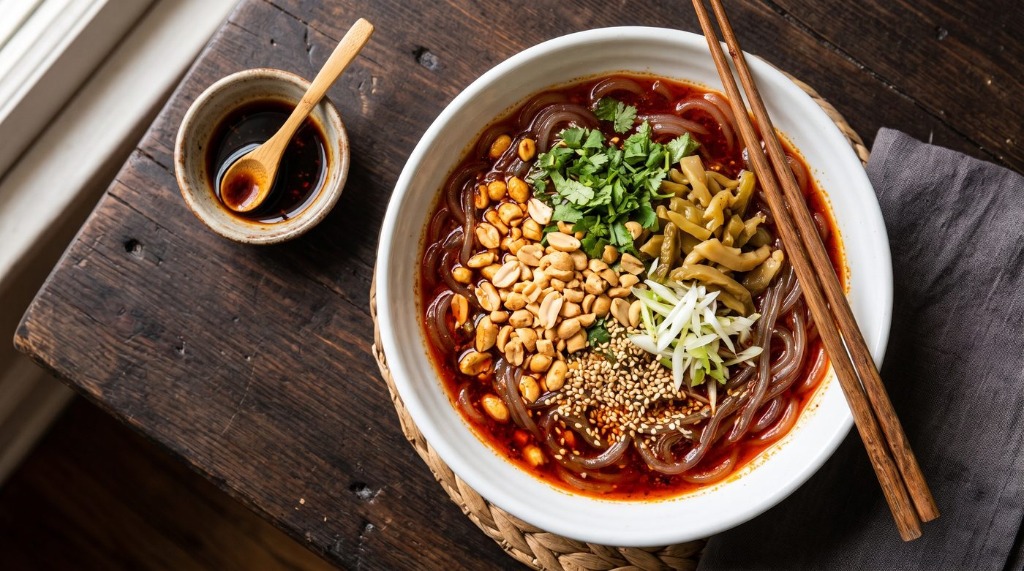
Description / 简介
Hot and Sour Noodles (酸辣粉) are the bowls that keep Chongqing up late. Slender sweet potato starch noodles are boiled until they turn glassy and slippery, then built up with a chili oil so red it looks lacquered, a shot of black vinegar for the sour note, and enough Sichuan pepper to leave your lips buzzing.
Ingredients / 食材
Sweet potato starch noodles 200g (dry 红薯粉 or 宽粉)
Chicken or vegetable stock 600ml
Light soy sauce 20ml
Chinkiang black vinegar 30ml
Chili oil 60ml (plus extra to serve)
Chili flakes 5g
Sichuan peppercorn powder 2g
Garlic 3 cloves (finely minced)
Pickled mustard greens 80g (drained and chopped)
Roasted peanuts 30g (crushed)
Cilantro 15g (chopped)
Scallions 2 (finely chopped)
White sesame seeds 5g
Sesame paste 15g (optional, for the creamy version)
Sugar 3g
Salt 2g
Cooking oil 30ml (for blooming the chili flakes)
Instructions / 制作过程
Step 1: Toast the Peanuts and Prep the Toppings
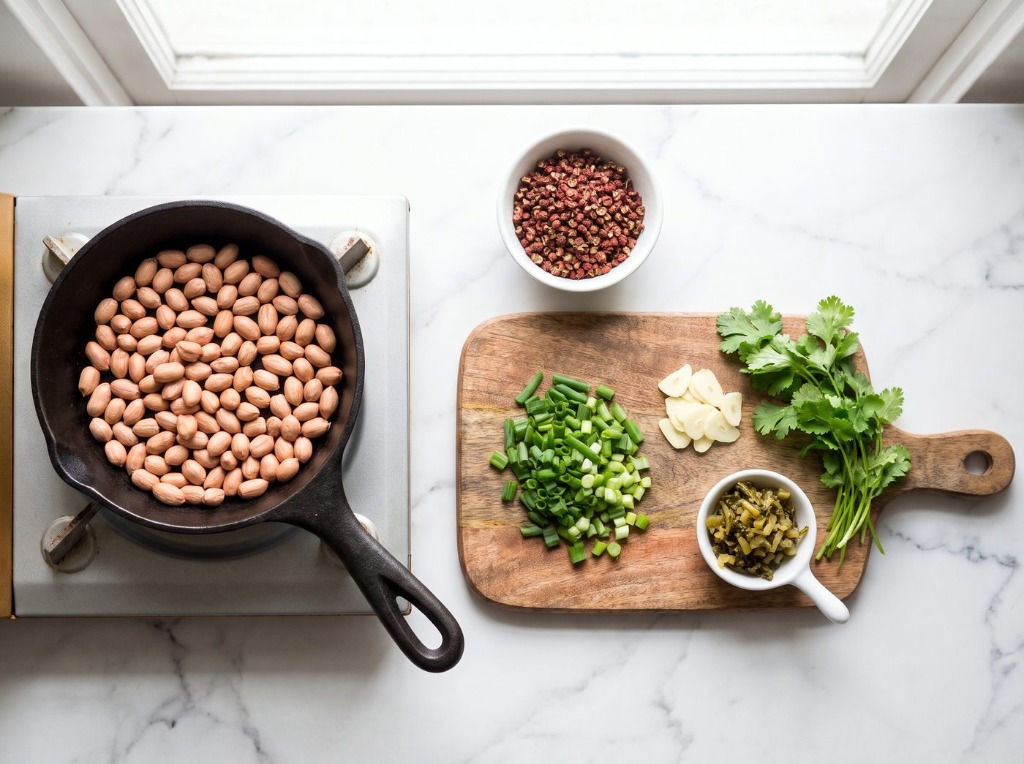
Toast the raw peanuts in a dry skillet over medium heat for 4 to 5 minutes, shaking the pan often, until they turn golden and smell sweet. Let them cool for a minute, then crush them roughly with a rolling pin - pieces, not powder, so the bowl keeps some texture. While they cool, chop the pickled mustard greens and squeeze out the excess brine, chop the cilantro and green onion, and mince the garlic. Getting all of this done first matters, because once the noodles are cooked the bowl has to be assembled in under a minute.
Step 2: Bloom the Chili Flakes
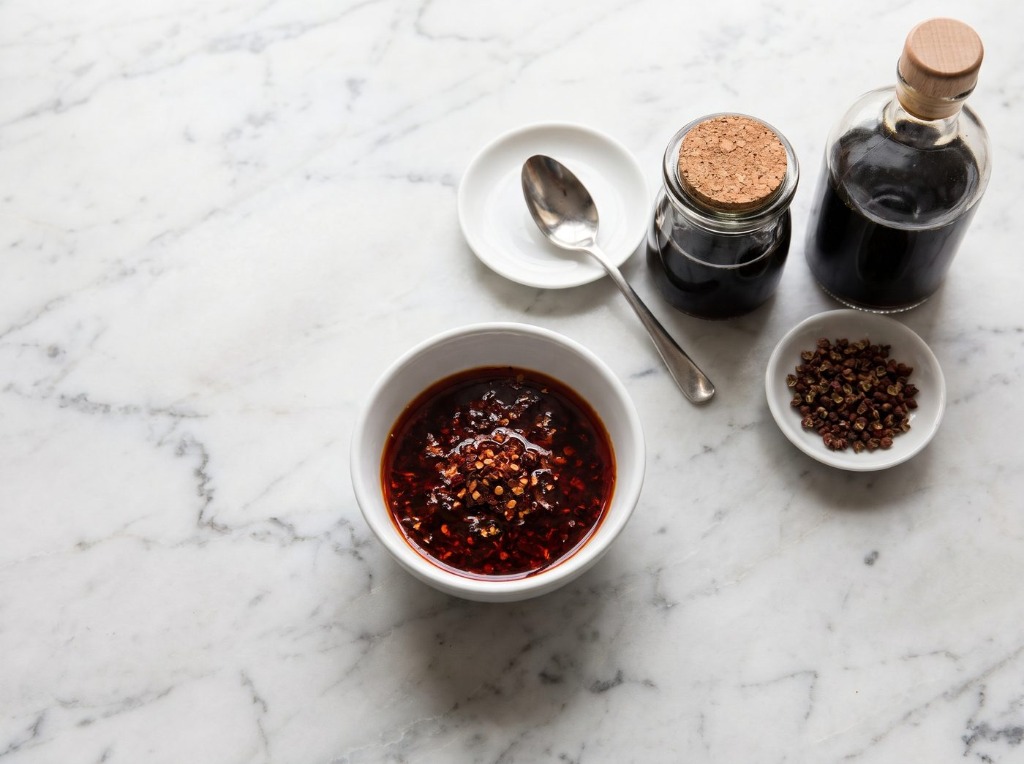
Heat the cooking oil in a small pan over medium-high heat until it shimmers but does not smoke. Take the pan off the heat for 20 seconds, then add the chili flakes and the Sichuan peppercorn powder. The mixture will foam and smell fragrant, which means the oil is hot enough. Pour it over the minced garlic in a bowl and stir: the raw garlic cooks in the hot oil, the chili flakes deepen from red to a dark brick color, and the peppercorn goes from dusty to aromatic. This is the single most important step in the dish, because the chili oil carries all of the heat and none of the bitterness.
Step 3: Cook the Noodles
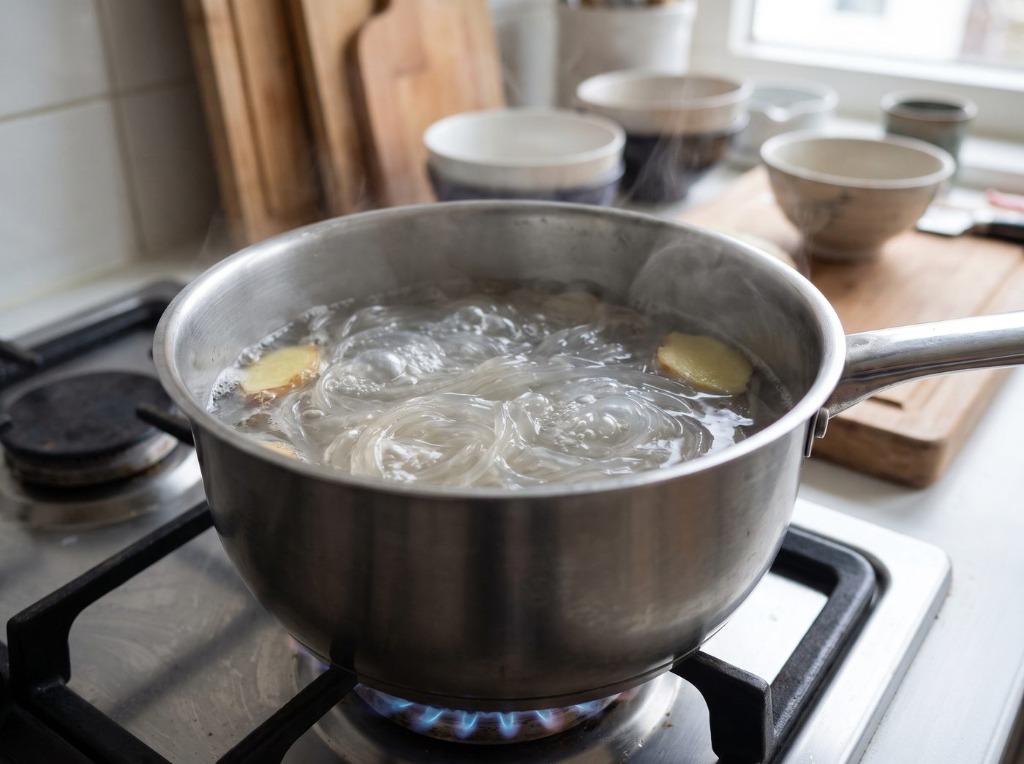
Bring a large pot of water to a full rolling boil and add the sweet potato noodles. Stir right away so they do not clump together, then cook them for 3 to 4 minutes, until the strands turn fully translucent and completely soft with no white core left in the middle. These noodles cook faster than they look, and the difference between springy and gluey is about 30 seconds. Test one and bite it: it should feel slippery and elastic, not pasty. Have the cold water bowl ready, because the next step is immediate.
Step 4: Rinse and Drain
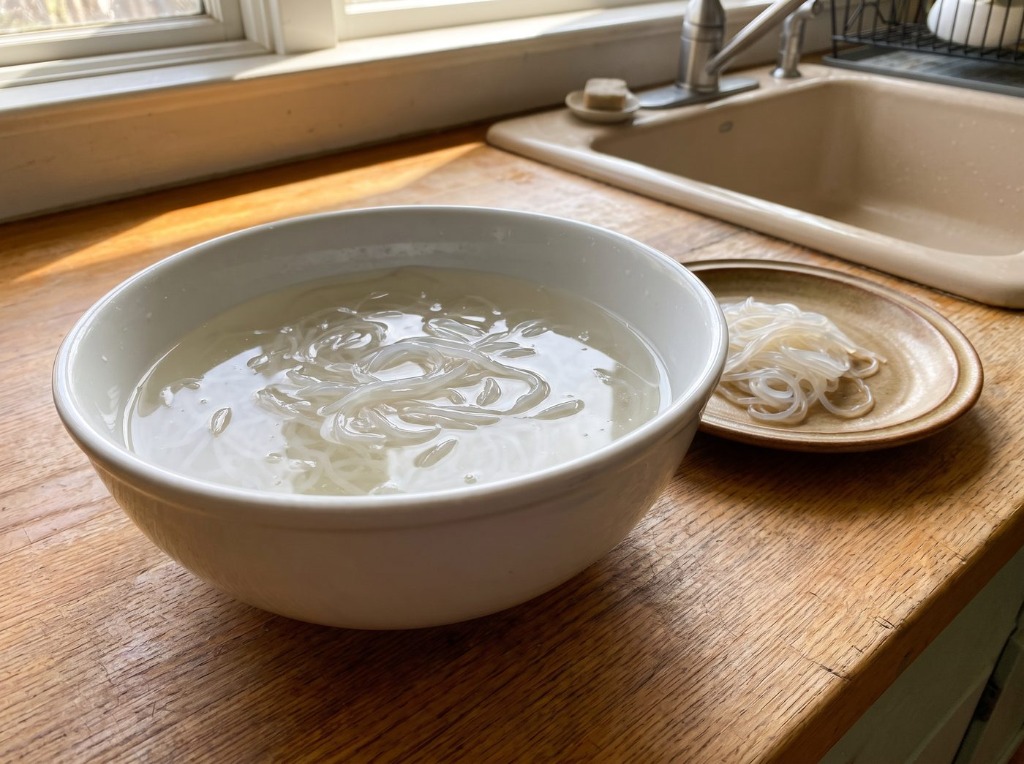
Drop the noodles straight into a bowl of cold water and swirl them with your fingers for a few seconds. This stops the cooking instantly, washes off the surface starch that would otherwise make the broth cloudy and sticky, and is the step that separates glassy, slippery noodles from a bowl of paste. Drain them in a colander for a minute, shake off the excess water, and divide them between two serving bowls. They should sit in a loose nest, not a solid mat.
Step 5: Build the Bowl
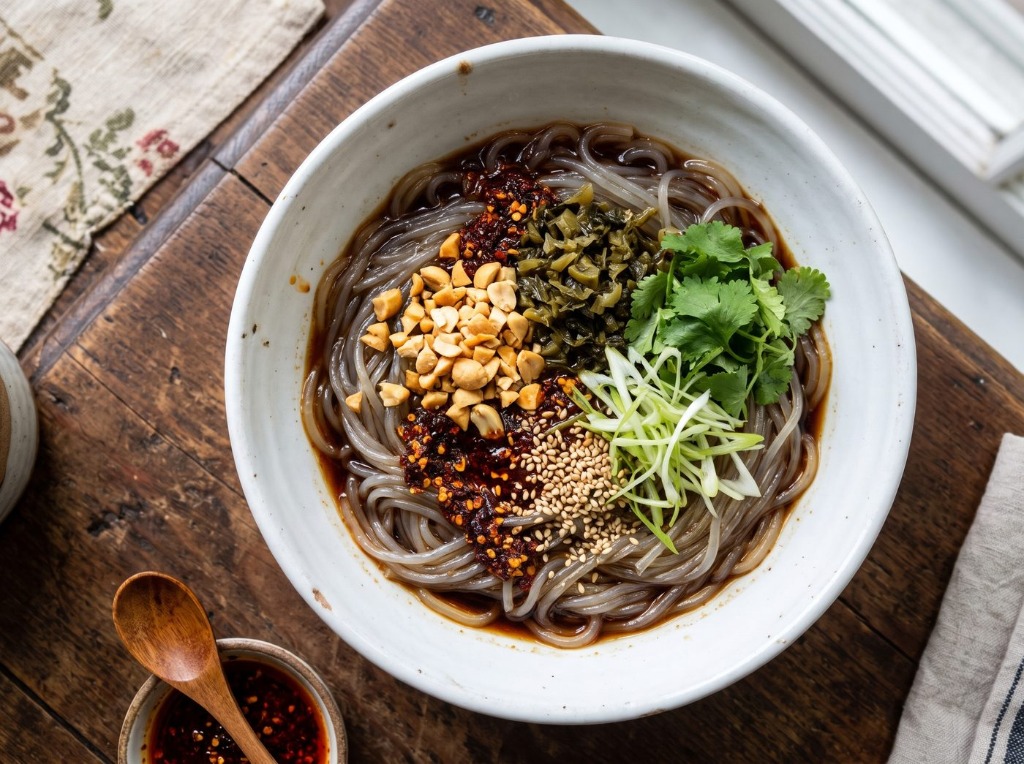
In the bowl with your chili oil, add the light soy sauce, the black vinegar, the sugar, the sesame paste if you are using it, and a pinch of salt, then whisk it together until the sesame paste loosens and the sauce turns glossy. Pour in the hot stock and stir again. Taste it before it meets the noodles: it should be noticeably salty, sharply sour and warmly spicy all at once, because the noodles and the peanuts will soften it as you eat. Set the drained noodles in the bowls, ladle the seasoned broth over them, then pile the pickled mustard greens on one side, the crushed peanuts on the other, and scatter the white sesame, the cilantro and the green onion over the top.
Step 6: Mix and Serve
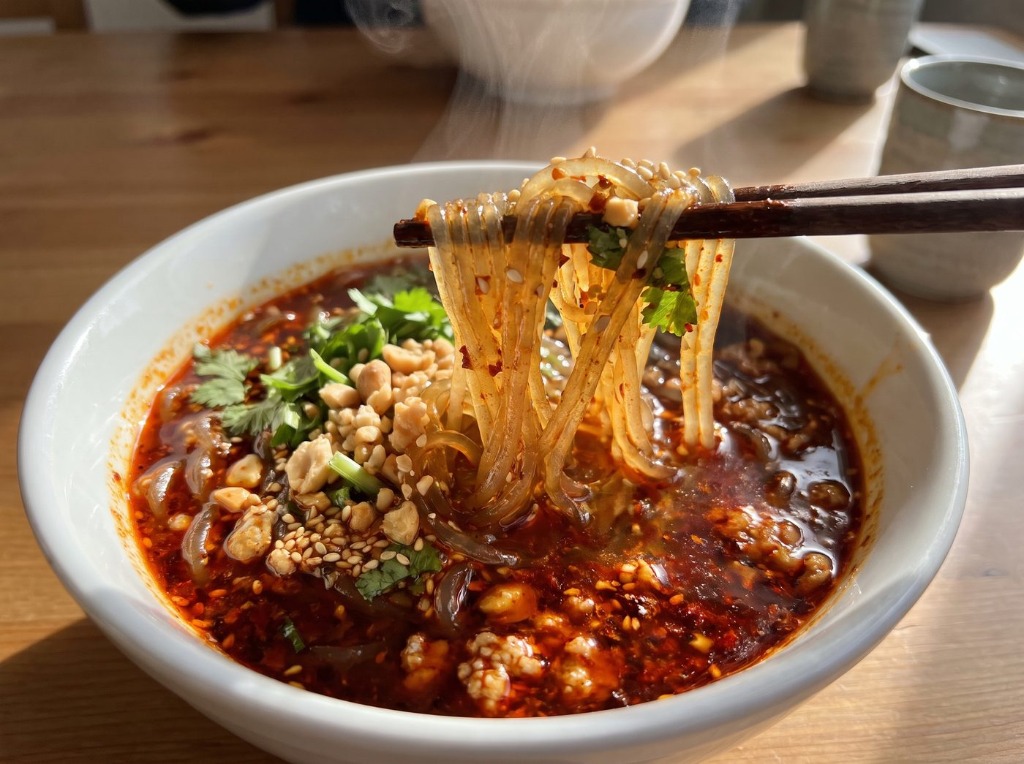
Finish with a thread of extra chili oil and serve immediately, while the broth is still steaming and the noodles are still slippery. Mix it thoroughly from the bottom of the bowl with your chopsticks before the first bite, so that every mouthful carries chili oil, peanuts and a piece of pickled green. If it tastes a little flat after the first few mouthfuls, add a splash of vinegar and another thread of chili oil right at the table.
Tips
- Bloom the chili flakes in oil that is hot but not smoking. Oil that is too hot burns the flakes and turns the whole bowl bitter, and oil that is too cool leaves raw garlic in the sauce.
- Rinse the noodles. This is the step most home cooks skip and the reason their broth turns gluey. Cold water stops the cooking, removes surface starch, and keeps the strands springy for the whole bowl.
- Taste the broth before it meets the noodles. It needs to be more assertive than feels right, because the noodles and the peanuts will soften it as you eat.
- Toast the peanuts rather than using them raw. Toasting takes four minutes and turns a bland garnish into the best part of the bowl.
- Add the toppings in layers rather than stirring everything in. Pickled greens on one side, peanuts on the other, herbs on top, so each bite you take is different.
- Serve it in warm bowls. A cold bowl drops the temperature of the broth fast, and the point of this dish is the heat.
FAQ
What are the noodles made from? Sweet potato starch, which is why they stay translucent and glassy when cooked instead of turning soft and doughy like wheat noodles. If you cannot find them, use the wide sweet potato vermicelli sold for hot pot and shave the cooking time by a minute.
Can I make it without the chili oil? You can, but then it is a sour noodle soup rather than hot and sour noodles. The chili oil is not just heat, it is the flavor base that carries the garlic, the peppercorn and the color.
How spicy will it be? Adjustable, and easier to control than you think. The heat sits in the chili oil, so add half the oil and pour more in at the table if you want it hotter.
Is the Sichuan peppercorn essential? It is what makes the dish taste Sichuan rather than merely hot. If you cannot find it, the bowl still works, but you lose the tingling numbness that makes people go back for a second serving.
Can I make it ahead? The broth, the chili oil and the toppings all keep well for a week in the fridge. Cook the noodles fresh for each serving, because reheated sweet potato noodles turn into glue.
Can I add meat or vegetables? Yes. Minced pork fried in the chili oil, sliced beef, or a handful of sprouts and bok choy all work. Add them to the bowl under the noodles so they cook slightly in the hot broth.