Blanched Shrimp
白灼虾
Description / 简介
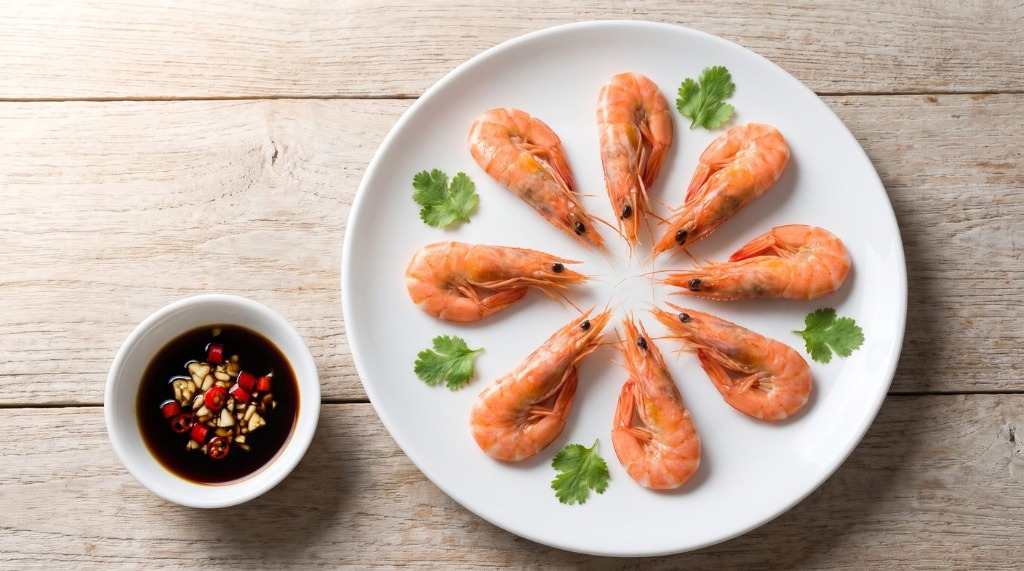
Blanched Shrimp (白灼虾) is the most elemental expression of Cantonese seafood cookery: whole shrimp with their heads and shells still on dropped into boiling ginger-scented water for barely two minutes, then shocked in ice so they turn glossy pink and springy firm. There is no batter, no heavy sauce, no deep frying - just heat, timing, and a small bowl of soy sauce and ginger for dipping.
Ingredients / 食材
Whole live or fresh shrimp 500g (about 10 large shrimp, shell-on with heads on)
Fresh ginger 30g (15g sliced for the water, 15g minced for the dip)
Scallions 2 stalks (tied into a knot)
Light soy sauce 30ml
Shaoxing rice wine 10ml
Sugar 2g
Sesame oil 5ml
Chili 1 (optional, finely sliced)
Ice water 1L (for shocking the shrimp)
Coriander 10g (optional, for garnishing)
Dipping sauce:
Light soy sauce 30ml
Rice vinegar 10ml
Minced ginger 15g
Sesame oil 5ml
Sugar 2g
Instructions / 制作过程
Step 1: Rinse the Whole Shrimp
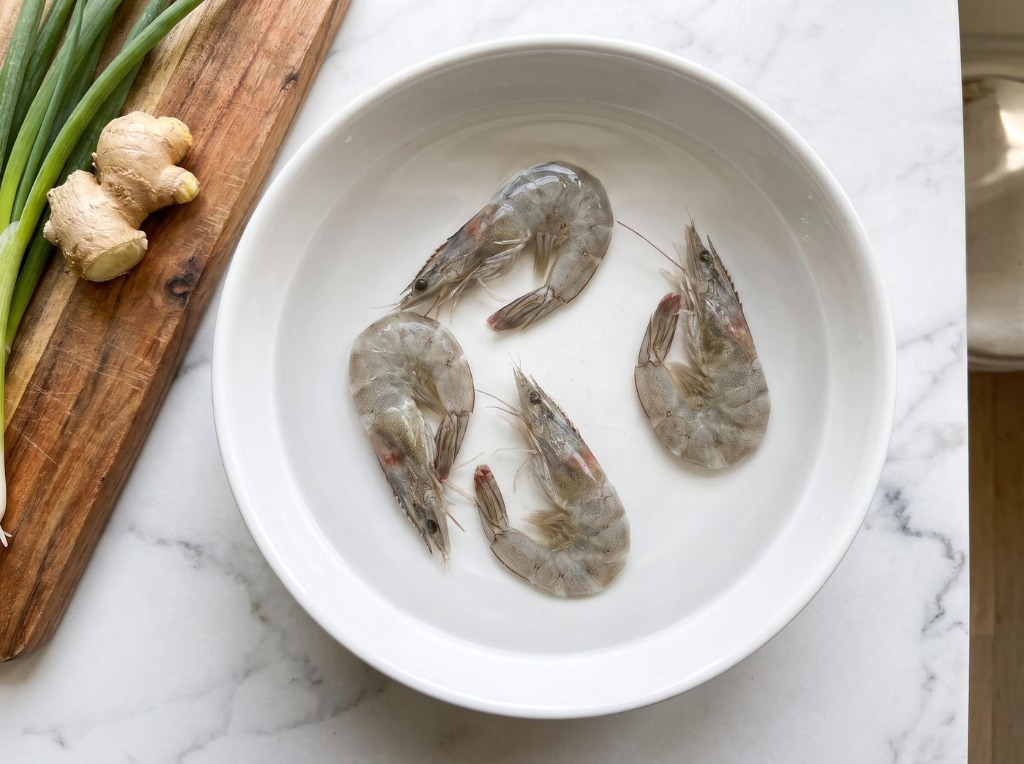
Rinse the shrimp under cold running water and check the shells for any grit or debris. Keep them whole: head on, shell on, tail on. Nothing is peeled or deveined at this stage, because the shell is what insulates the meat from the boiling water and what seasons the cooking liquid, and the head carries the sweetest juices in the animal. If you are using frozen shrimp, thaw them overnight in the refrigerator rather than in warm water, and pat them dry before they go into the pot. Give the shells a quick rinse and you are ready.
Step 2: Make the Dipping Sauce
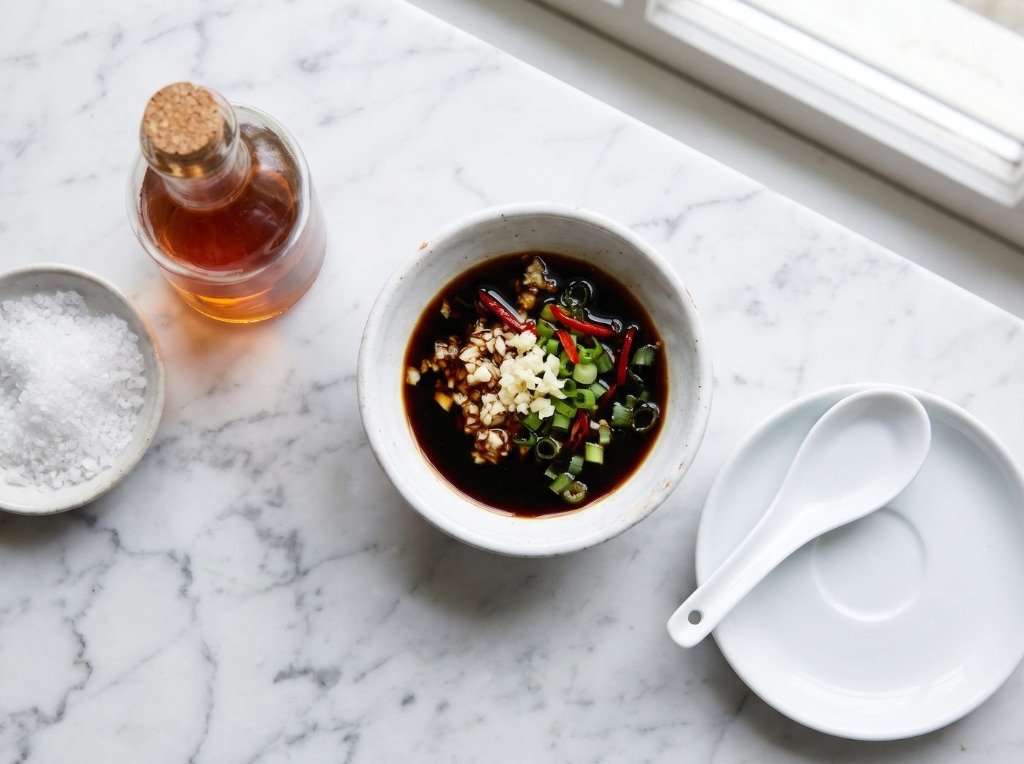
Combine the light soy sauce, rice vinegar, minced ginger, sesame oil, and sugar in a small bowl and stir until the sugar dissolves. Taste it and adjust: it should be salty and sharp enough to cut through the natural sweetness of the shrimp, with enough acidity to make the meat taste brighter. This sauce is the only seasoning the dish needs, so make it slightly more assertive than feels right on its own - the shrimp will mellow it. A few slices of fresh chili stirred through at the end adds welcome heat.
Step 3: Boil the Aromatic Water
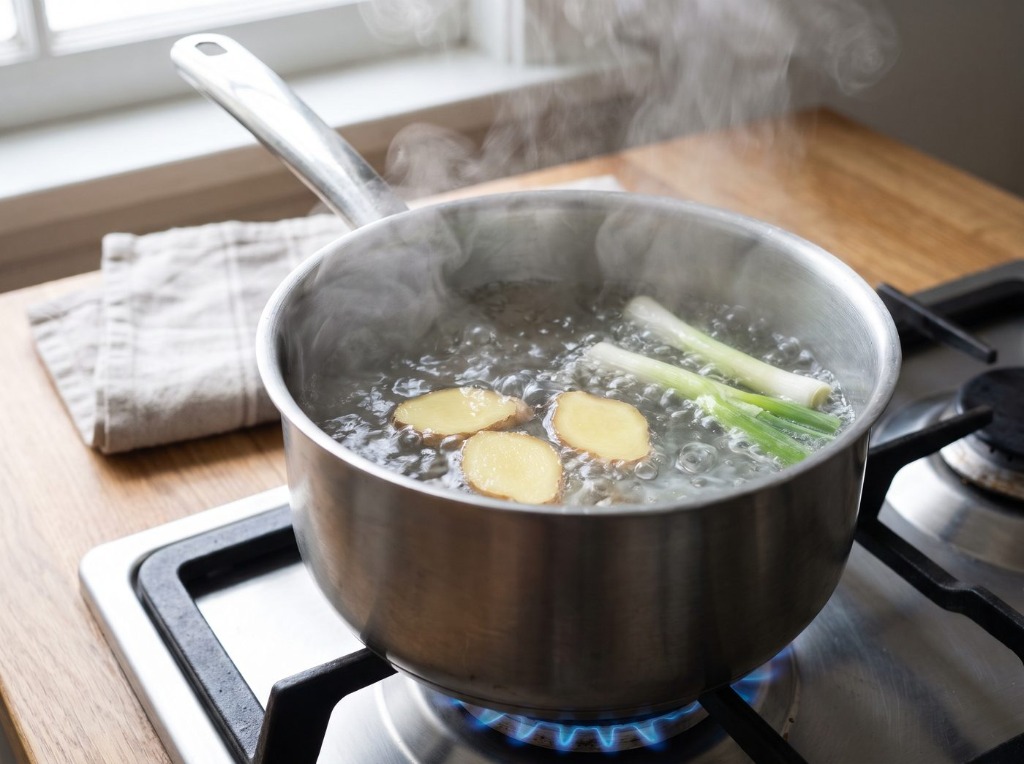
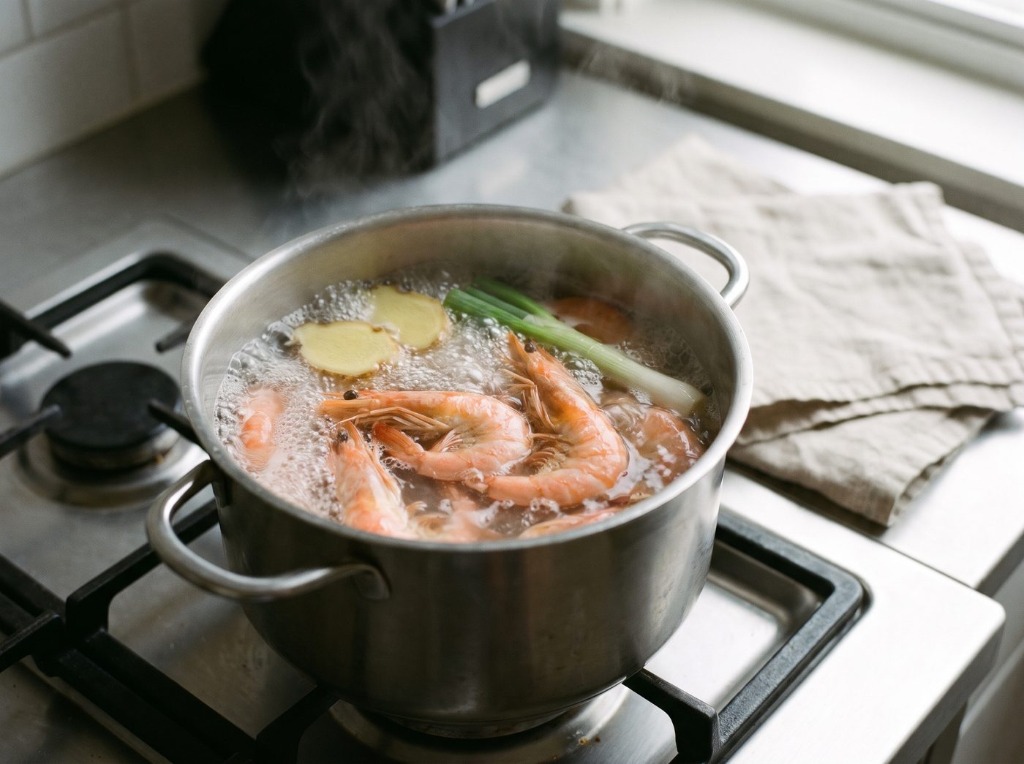
Fill a pot with enough water to comfortably cover the shrimp and bring it to a full rolling boil. Add the sliced ginger, the tied scallions, and the rice wine. The ginger and scallions are not there for you to eat - they perfume the cooking water and cut any gaminess from the shrimp. The wine deepens the sweetness of the shellfish rather than masking it. Skim any foam off the surface once it rises, so the water stays clear and the shrimp cook cleanly.
Step 4: Blanch the Shrimp
Lower the whole shrimp into the boiling water and cook them for 2 to 3 minutes, no longer. The moment the shells turn a bright, opaque pink and the bodies curl into a loose C shape, they are done. Shrimp cook fast and harden quickly, and every extra minute past this point squeezes out moisture and turns the texture from springy to rubbery. Keep the shells on throughout - they protect the meat from the direct heat and give the cooking water a deeper flavor. Lift the shrimp out immediately with a slotted spoon and let them drain for a few seconds over the pot.
Step 5: Shock in Ice Water
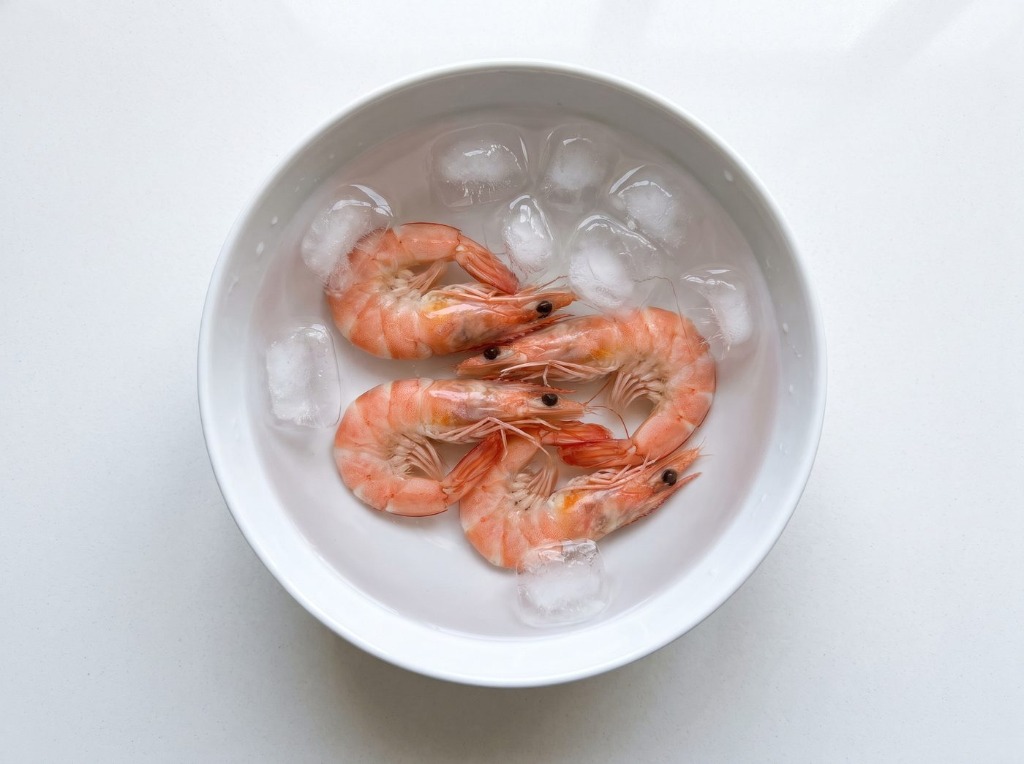
Transfer the shrimp straight into a bowl of ice water and leave them for 2 to 3 minutes. This cold shock is what separates good blanched shrimp from merely cooked shrimp: the sudden temperature drop halts the cooking instantly, and the residual heat then works its way outward, firming the proteins just enough that the shrimp bounce when you bite them. You will notice the shells brighten to a more vivid, even coral pink. Drain them well in a colander and let them sit for a minute before serving.
Step 6: Serve with the Dip
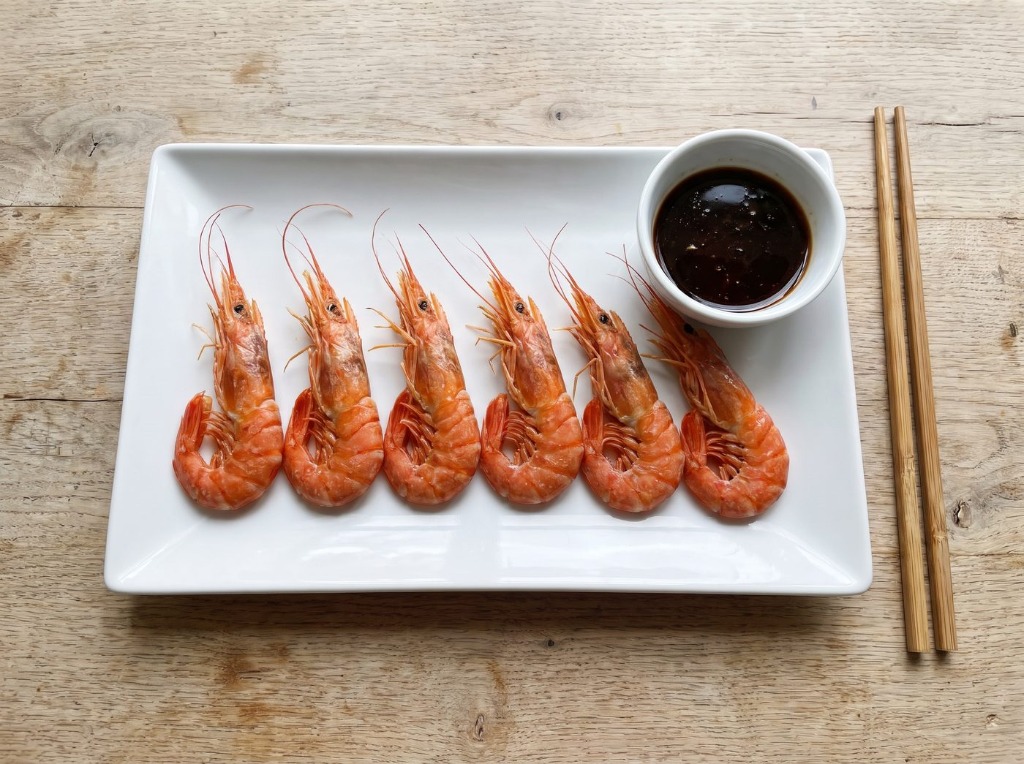
Arrange the chilled shrimp on a cold plate, shells and heads intact, and pour the dipping sauce into a small dish beside them. Guests crack the shells at the table: twist the head off, pull the tail away, and peel the body, then squeeze the head and the shell for every drop of juice it still holds. A scattering of fresh cilantro gives the plate a little color and a grassy note that works beautifully against the sweet shellfish. Serve immediately, while the shrimp are still cold and firm. Blanched shrimp are at their best on their own, but they also make an excellent addition to cold dishes and summer salads, where their firm texture holds up far better than poached shrimp.
Tips
- Buy shrimp that smell faintly of the sea and of nothing else. If they smell strongly of ammonia, they are not fresh and no amount of cooking will fix that.
- Never peel the shrimp before blanching. The shells insulate the meat from boiling water, and the head and body fat season the cooking liquid. Peeling them first only costs you flavor and makes the meat more fragile.
- Time the blanching by color, not by the clock. Once the shells are opaque pink with no trace of grey, they are done, whatever the timer says.
- The ice bath is not optional. Skipping it leaves you with warm, softer shrimp rather than the firm, bouncy texture that defines the dish.
- Leave the heads on when you serve. The head and the soft body fat inside it hold the sweetest juice in the shrimp, and squeezing them over the dipping sauce is the best bite in the bowl.
- Leftover shrimp make an excellent cold salad with cucumber, cilantro, and a drizzle of the dipping sauce.
FAQ
Should I peel the shrimp before cooking? No. Blanched shrimp is a shell-on dish from start to finish. The shell protects the meat from the boiling water and flavors it, and peeling before cooking means both are lost. Leave the peeling to the table, where it is part of the meal.
How do I eat whole shrimp? Twist the head off, pull the tail away from the body, then peel the shell off the body with your fingers. Squeeze the head and the body shell over the dipping sauce before you discard them - the juice is the best part.
Can I use frozen shrimp? Yes, thaw them overnight in the refrigerator and drain them well. Never thaw in warm water, and do not blanch them straight from frozen, because the uneven temperature leaves the tails overcooked while the centers stay cold.
How long do I cook frozen shrimp in boiling water? About 3 minutes, and watch them closely. Frozen shrimp release more water and go from done to rubbery faster than fresh shrimp do.
Can I make the dipping sauce ahead? Yes, mix it up to two days in advance and keep it refrigerated. Add the sesame oil just before serving so the aroma stays bright.
Is blanched shrimp healthy? It is one of the highest-protein, lowest-fat ways to cook seafood, with almost no oil. The dipping sauce adds sodium, so use reduced-salt soy sauce if that matters to you.