Dan Dan Noodles
担担面
Description / 简介
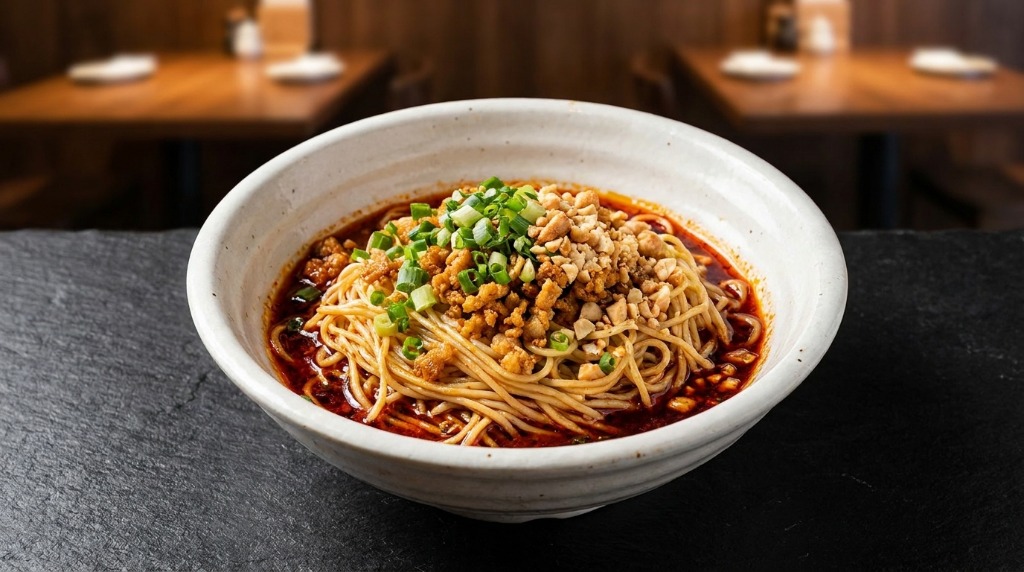
Dan Dan Noodles (担担面) are the iconic Chengdu street snack: thin wheat noodles tossed in fiery chili oil sauce, crowned with crispy minced pork and Yibin preserved mustard greens. Every bowl balances ma (numbing) against la (spicy), built on fragrant chili oil, toasted Sichuan peppercorn and fermented ya cai. The name comes from the dan dan carrying pole that vendors balanced on one shoulder. The heat is famous, but the balance is precise, and a splash of starchy noodle water makes it glossy.
Ingredients / 食材
Ground pork 225g
Vegetable oil 30ml
Dried wheat noodles 250g
Yibin ya cai (preserved mustard greens) 60g (rinsed and finely chopped)
Chinese sesame paste 15g
Sichuan chili oil 36ml
Light soy sauce 45ml
Chinkiang black vinegar 15ml
Sweet bean paste (tianmianjiang) 15g
Shaoxing wine 15ml
Sugar 5g
Sesame oil 5ml
Sichuan peppercorns 8g (whole)
Garlic 13g (minced)
Ginger 8g (minced)
Baby bok choy 150g
Scallions 20g (green parts, finely sliced)
Roasted peanuts 30g (crushed)
Reserved noodle cooking water 90ml
Instructions / 制作过程
Step 1: Toast and Grind the Sichuan Peppercorns
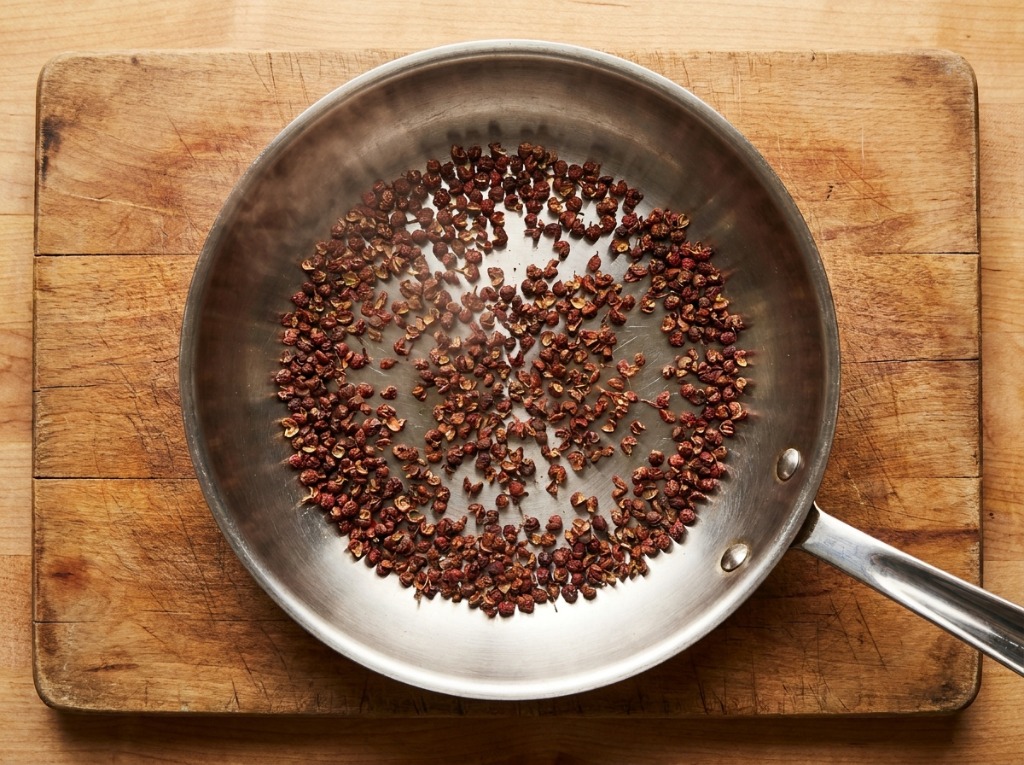
Toast 3g of the whole Sichuan peppercorns in a dry skillet over medium-low heat for 2 to 3 minutes, shaking the pan constantly, until they smell floral and citrusy. Watch them closely, because they burn within seconds and a single burnt batch makes the whole bowl bitter. Let the peppercorns cool completely, then grind them in a spice grinder or mortar and pestle, sifting out the tough husks. Set the powder aside; you will need about 5g in total, split between the pork topping and the sauce.
Step 2: Marinate the Ground Pork
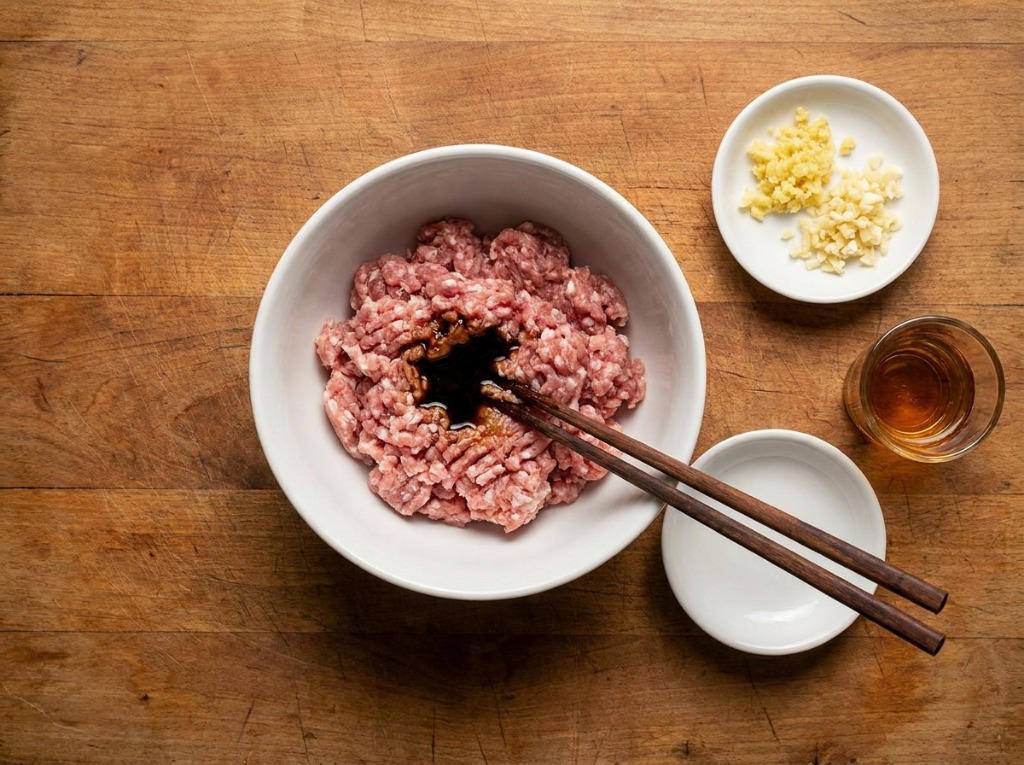
Combine 225g of ground pork with 15ml of Shaoxing wine and 15ml of light soy sauce in a bowl. Mix with chopsticks until the meat turns tacky and the liquid disappears, then set aside for 10 minutes while you prepare the rest. This short rest keeps the pork tender and stops it from drying out and grabbing the wok later.
Step 3: Stir-Fry the Pork Topping
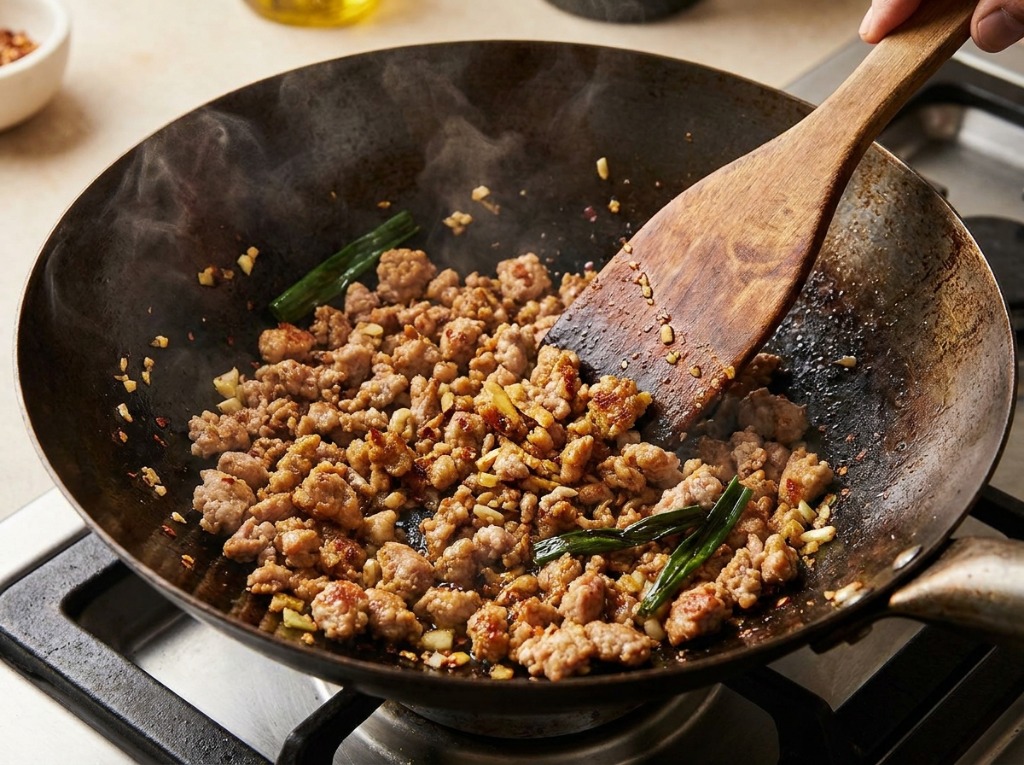
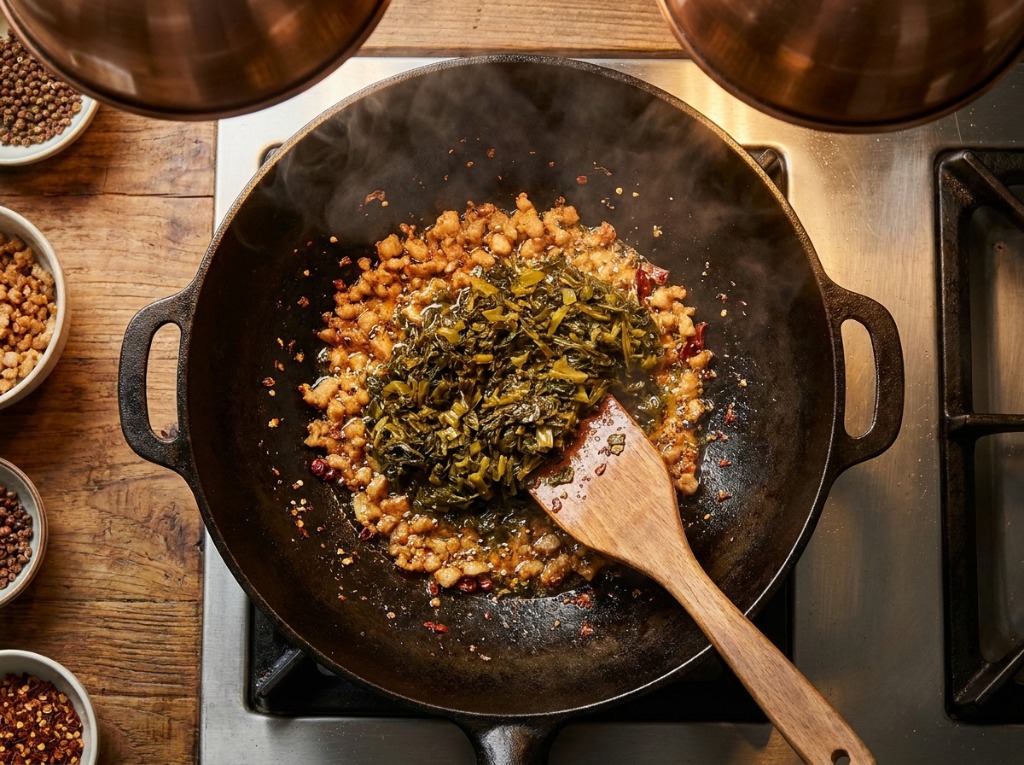
Heat 30ml of oil in a wok over high heat until it shimmers, then add the marinated pork. Press it into a thin layer and break it into small crumbles with the edge of a wooden spatula. Fry for 5 to 7 minutes, letting each side crust before you turn it, until the meat is golden brown, dry and crumbly and the rendered fat runs clear. Resist the urge to stir constantly; the crust is where the flavor comes from.
Step 4: Fold In the Ya Cai
Add 8g of minced ginger, 5g of minced garlic and 15g of sweet bean paste to the pork and stir-fry for 30 seconds, just until fragrant, taking care not to scorch the garlic. Tip in the 60g of rinsed, finely chopped Yibin ya cai and stir-fry for another 2 minutes, until the greens darken and the whole mixture smells deeply savory. Take the wok off the heat and stir in 3g of the ground Sichuan peppercorn powder, then set the topping aside.
Step 5: Build the Sauce Base in Each Bowl
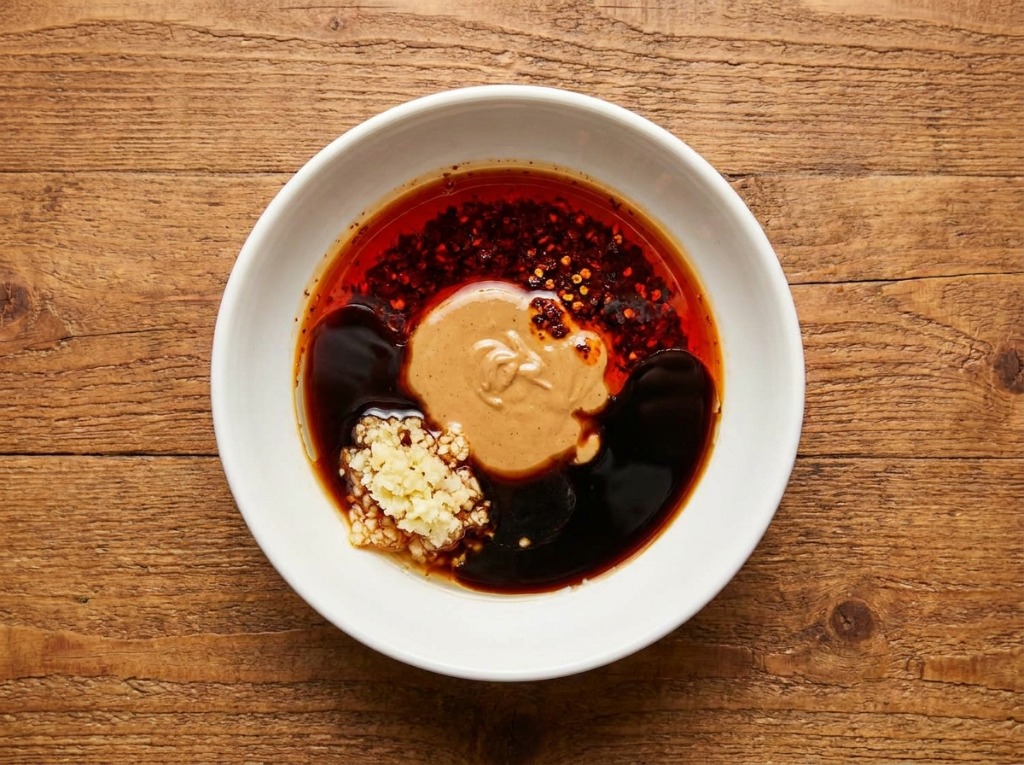
Divide the sauce ingredients between three serving bowls: 15g of Chinese sesame paste, 36ml of Sichuan chili oil, 30ml of light soy sauce, 15ml of Chinkiang black vinegar, 5g of sugar, 5ml of sesame oil, the remaining 8g of minced garlic and 2g of ground Sichuan peppercorn powder. Do not stir yet. Leaving the ingredients layered at the bottom of the bowl lets them emulsify at the last possible second, which keeps the sauce vivid and fragrant.
Step 6: Boil the Noodles and Blanch the Greens
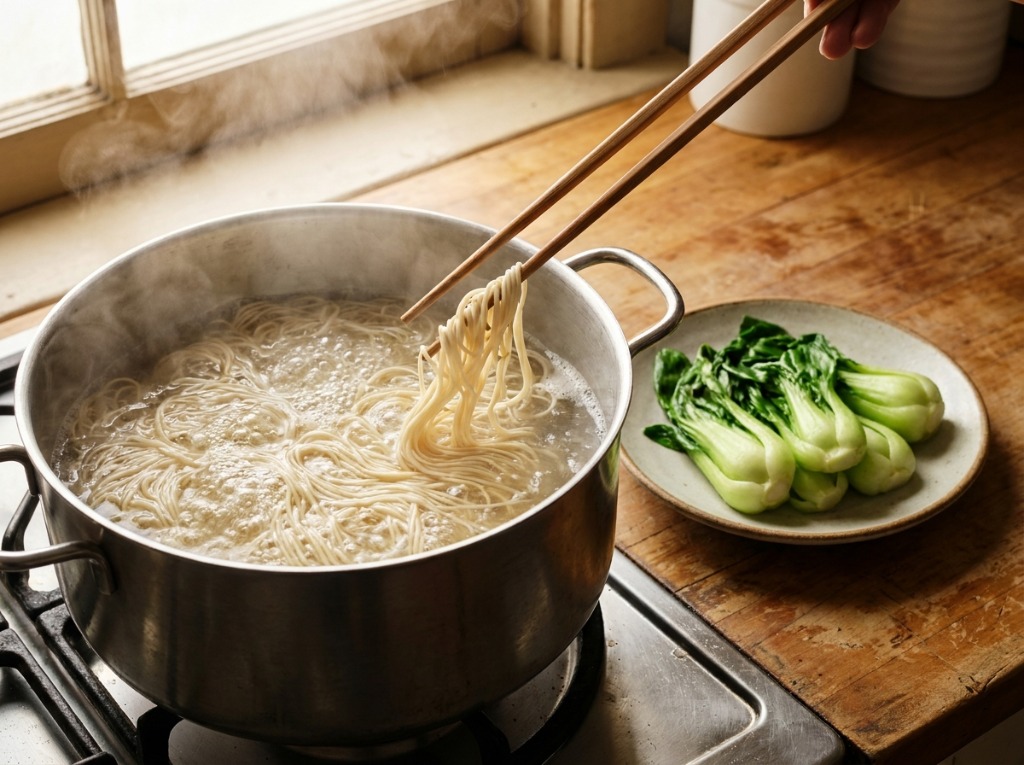
Bring a large pot of unsalted water to a rolling boil. Drop in 250g of dried wheat noodles and stir immediately so they do not clump, cooking until just tender with a firm bite, about 3 to 4 minutes (if you are using fresh Chengdu-style noodles, use about 300g and cook for 2 to 3 minutes instead). Blanch 150g of baby bok choy in the same water during the last 30 seconds. Before you drain, scoop out about 90ml of the starchy cooking water, because that starchy water is the secret emulsifier for your sauce.
Step 7: Assemble and Toss
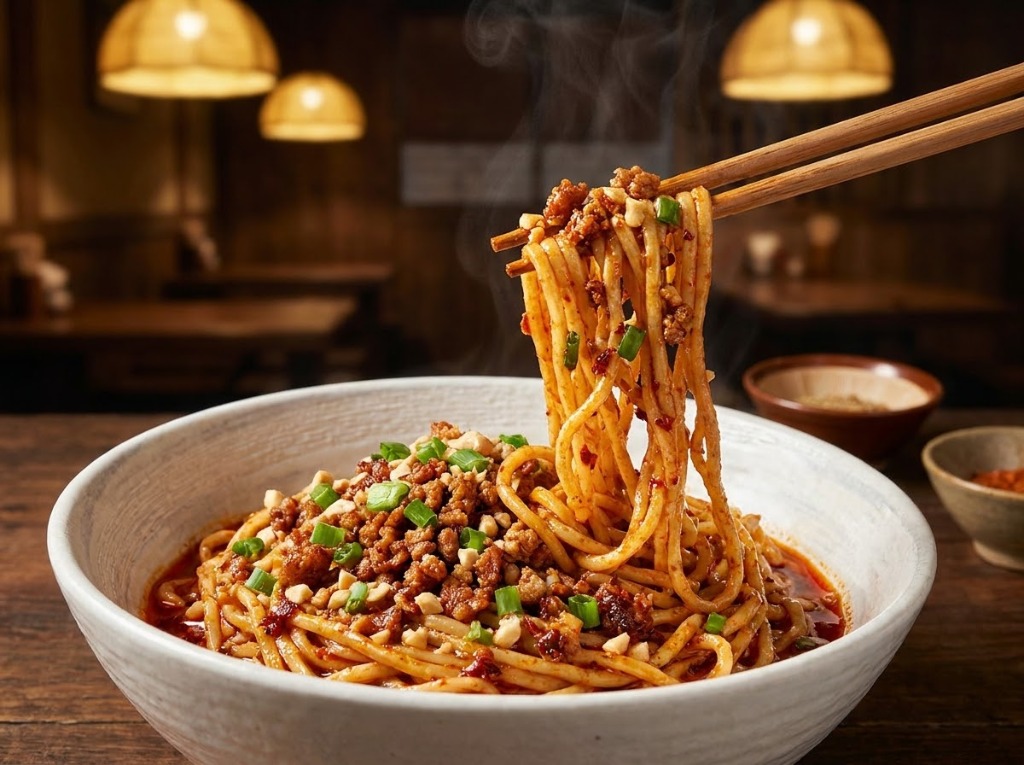
Pour about 3 tablespoons of the hot noodle water into each bowl of sauce and stir vigorously until the sesame paste, chili oil and soy sauce come together into a glossy reddish-brown emulsion. Drain the noodles well and pile them into the bowls, then add the bok choy and a generous spoonful of the pork topping. Scatter over 30g of crushed peanuts and 20g of sliced scallions, and tell everyone to toss from the bottom up before the first bite, until every strand is coated deep red.
Tips
- Toast your peppercorns fresh. Pre-ground Sichuan pepper loses most of its numbing punch within a few weeks, and the citrusy aroma is what makes the dish sing.
- Use Chinese sesame paste, not tahini. Chinese paste is made from deeply toasted seeds and is dark and nutty, while tahini is pale, raw-seed and noticeably bitter.
- Rinse the ya cai first. Yibin ya cai is quite salty, so a quick rinse and squeeze gives you control over the final seasoning of the bowl.
- Dial the heat to your taste. Use 1 tablespoon of chili oil per bowl for a milder bowl and keep the Sichuan peppercorn, since the tingle comes from the peppercorn rather than the chili.
FAQ
What is ya cai, and can I substitute it?
Ya cai is a preserved mustard green stem from Yibin in southern Sichuan, and it is the savory soul of this dish, so there is no true substitute. In a pinch, finely chopped zha cai (preserved mustard tuber) will work, though the flavor leans spicier and more aromatic.
Is dan dan noodles supposed to be a soup?
No. Authentic Chengdu-style dan dan noodles are served dry, with a concentrated sauce sitting at the bottom of the bowl that coats the noodles when you toss them. The soupy bowl you find in Hong Kong is a separate adaptation.
Can I make it vegetarian?
Yes. Replace the ground pork with 225g of crumbled firm tofu or finely chopped shiitake mushrooms, stir-fried the same way until golden and dry. Keep the sweet bean paste and the full sauce base and you still get the complete Sichuan flavor profile.
How spicy is it, and can I tone it down?
It is properly hot, but heat and numbing are separate dials. Cut the chili oil down to 1 tablespoon per bowl and leave the Sichuan peppercorn powder alone, and you turn back the la while keeping all of the ma.
How do I store leftovers?
Keep the pork topping and the sauce base in separate airtight containers in the fridge for up to 3 days, and cook fresh noodles each time. Assembled dan dan noodles go soggy within an hour, so never store them already mixed.