Egg Fried Rice
蛋炒饭
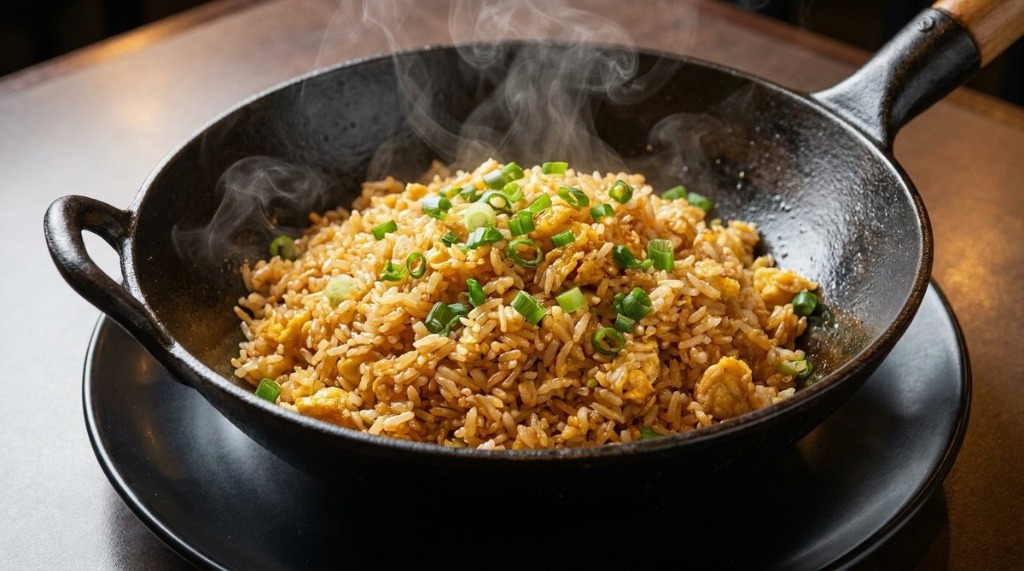
Description / 简介
Egg Fried Rice (蛋炒饭) is the soul of Chinese home cooking — the dish that turns leftover rice into something extraordinary with nothing more than eggs, oil, and a hot wok. What makes this method special is the hand-mixing technique: cracking eggs directly into the cold rice and using your hands to work the egg into every single grain creates an even, light coating that results in fluffy, golden rice with no soggy clumps.
Ingredients / 食材
Day-old cooked white rice (cold, slightly dried) 300g
Egg 2 pieces
Vegetable oil 2 tbsp
Salt 3g
Light soy sauce 1 tsp
Water (optional, if rice is too dry) 1-2 tbsp
Scallions 10g (chopped, for garnish)
Instructions / 制作过程
Step 1: Coat the Rice with Egg
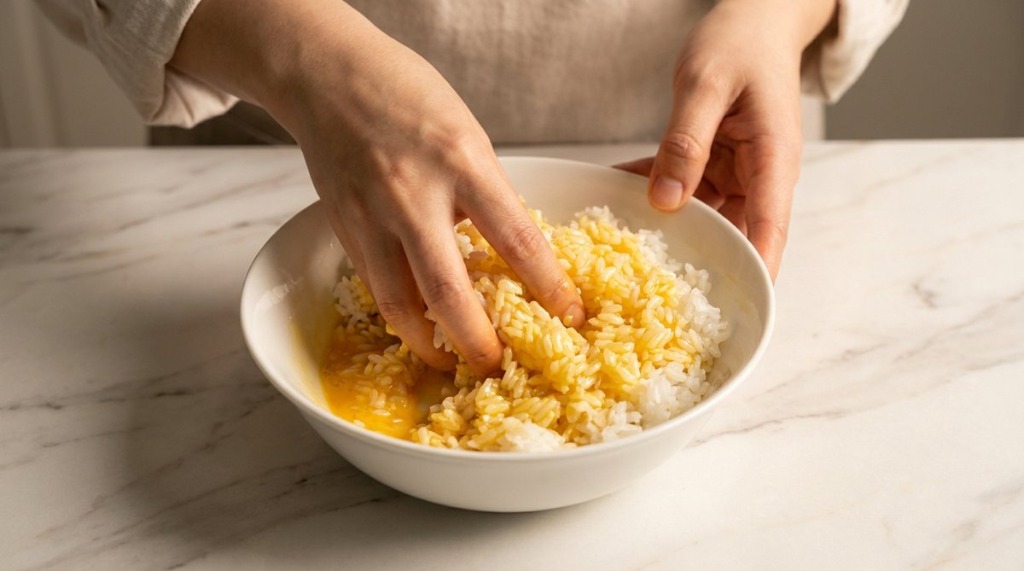
Place the cold day-old rice in a large mixing bowl. Crack 2 eggs directly onto the rice. Use your hands to thoroughly toss and rub the rice, breaking up any clumps and ensuring every grain is coated with egg. Keep mixing for about 1-2 minutes until the rice turns a pale golden yellow and the egg is evenly distributed. This hand-mixing is the secret to fluffy, clump-free fried rice.
Step 2: Heat the Wok
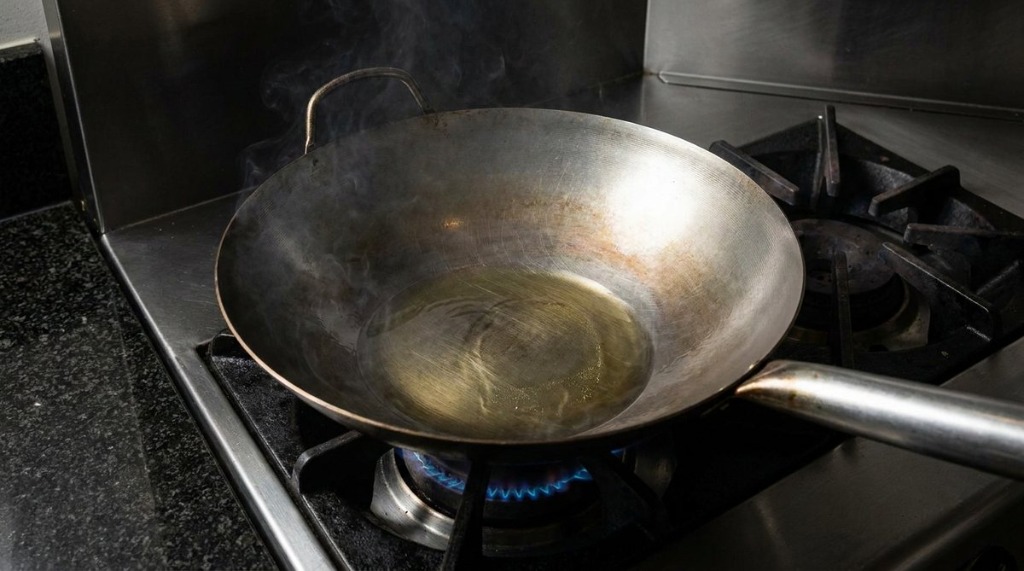
Place a wok over high heat and add the vegetable oil. Let the oil heat up until it shimmers and flows easily across the wok surface — about 30-45 seconds. You want the wok well-seasoned and the oil just beginning to smoke slightly. The high heat is essential for wok hei, that signature smoky char that makes restaurant-style fried rice so irresistible.
Step 3: Fry the Rice
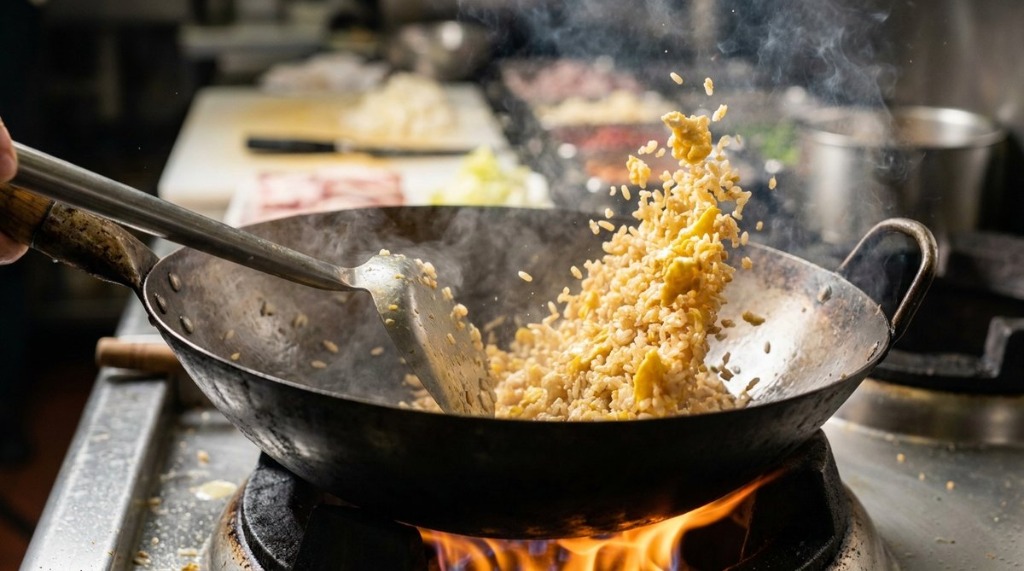
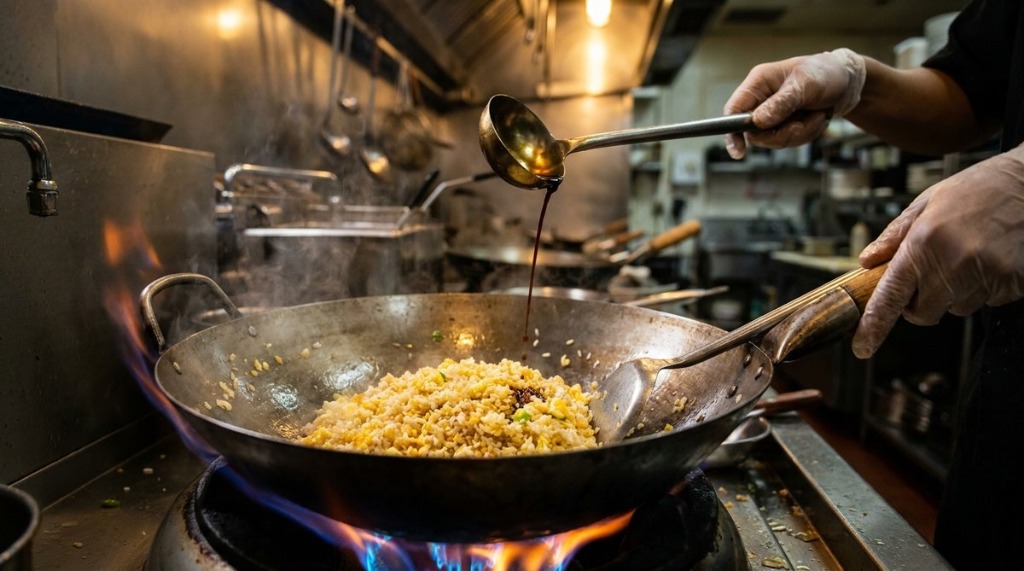
Add the egg-coated rice to the hot wok all at once. Let it sit for 10-15 seconds to caramelize slightly on the bottom, then stir-fry aggressively using a spatula, tossing the rice up and away from the sides of the wok. Keep the rice moving constantly — this prevents sticking and ensures even cooking. If the rice looks too dry or starts to stick, add 1-2 tablespoons of water to create steam and help lift the grains. Fry for 3-4 minutes total until the rice is heated through and the egg is fully cooked with golden bits throughout.
Step 4: Season and Final Toss
Add salt and drizzle the soy sauce directly into the wok. Toss the rice vigorously to distribute the seasonings evenly and let it fry for another 30 seconds to lock in the flavor. Scatter with chopped scallions, toss once more, then transfer to a serving bowl and serve immediately while piping hot.
Tips
- Day-old rice is non-negotiable. Freshly cooked rice is too moist and will turn into soggy, clumpy fried rice. Spread freshly cooked rice on a plate, refrigerate overnight, or even just leave it uncovered at room temperature for a few hours to dry it out slightly.
- Your hands are the best tool. Don't skip the hand-mixing step — it breaks up clumps and coats each grain with egg far more effectively than a fork or chopsticks.
- High heat is everything. The wok must be genuinely hot before the rice goes in. If the oil isn't shimmering, wait. Low heat gives you soggy, pale fried rice instead of that beautiful wok hei.
- Water is your rescue for dry rice. If the rice seems too dry to stir-fry properly, a tablespoon of water creates instant steam and helps everything come together without overcooking.
FAQ
Can I use freshly cooked rice?
It's not ideal — fresh rice is too moist and will clump up in the wok. If you must use fresh rice, spread it on a baking sheet and let it cool and dry out for 30 minutes before frying.
What kind of rice works best?
Long-grain jasmine or Carolina rice works best. Short-grain rice tends to be stickier and can clump together when fried.
Can I add other ingredients?
Absolutely — diced ham, shrimp, frozen peas (thawed), or leftover roasted chicken all work beautifully. Add them to the wok along with the rice, or stir them in at the end.
Why is my fried rice always soggy?
Two causes: the rice is too wet (use day-old rice) or the wok isn't hot enough (always preheat the oil until shimmering). Also, resist the urge to stir constantly — let the rice sit briefly to develop a slight char on the bottom.
What oil should I use?
Any neutral high-smoke-point oil works: vegetable oil, canola oil, or peanut oil. For extra flavor, you can finish with a few drops of sesame oil.